

 Ankle Pain
 Elbow Pain
 Foot Pain
 Hip Pain
 Knee Pain
 Lower Back Pain
 Neck Pain
 Shoulder Pain
 Upper Back Pain
 Hand Pain
 Wrist Pain


If you’ve been living with knee pain, you know how discouraging it can feel.
Maybe it started with a small ache after a walk, or a sharp reminder when you climbed the stairs. Over time, that discomfort can begin to shape your choices—maybe you skip the long walk, avoid the run, or hesitate before doing something you once loved.
And after a while, you start to wonder if this is just how things are now.
This was the situation for a client who came to our Walnut Creek location just a few months ago.
Mike’s Story
Mike, a semi-retired lawyer and proud grandfather, was living life to the fullest. He had successfully recovered from a total knee replacement and was doing great.
Then one day, after attending an event where he spent most of the day standing and walking, something changed. There wasn’t a fall or a specific injury—just a long day on his feet.
Shortly afterward, Mike began noticing increasing knee pain. The discomfort became achy and at times unbearable, especially when going up or down stairs. Activities he enjoyed, like hiking, suddenly felt out of reach.
The Story of Balance
When pain shows up, like it did for Mike, most of us focus on the place where it hurts. If your knee aches, it’s natural to assume the knee itself must be the problem.
But the human body isn’t a collection of isolated parts—it’s an interconnected system. Every joint, every muscle, and every movement works together.
When that system falls out of balance—when one side of the body carries more load than the other, or when posture shifts subtly over time—the body adapts. It compensates. And those compensations can eventually show up as pain.
That’s why two people can experience knee pain for completely different reasons. The real question isn’t simply “Where does it hurt?” The real question is “Why?” And once you understand that, you can begin moving forward.
The Three Steps Mike Took to Get Better
Mike followed the Egoscue Method’s simple framework to uncover the root cause of his knee pain and restore balance to his body.
Step One: Reveal
Through a postural assessment, Mike took photographs of his standing posture using the Egoscue Method’s specialized software called ePete. Guided by a therapist, the assessment revealed not only how his joints were aligned, but also why he was experiencing knee pain.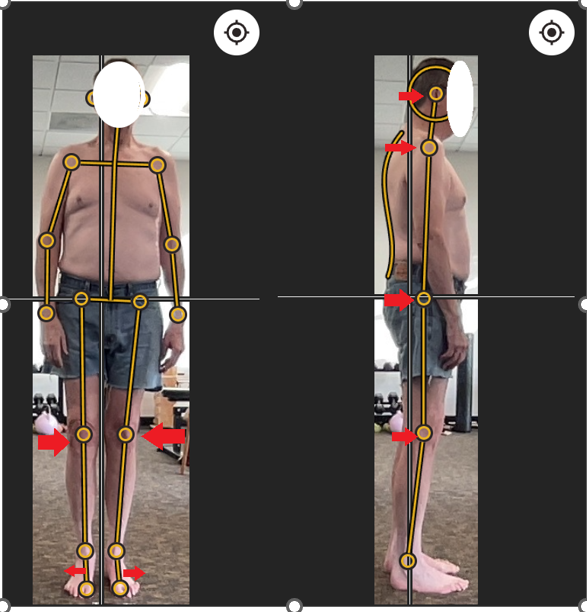
From Mike’s posture photos, it became clear that his knees were not actually the source of the problem.
Instead, his body had fallen out of balance—both left to right and front to back. His feet and knees were rotating excessively to compensate for that imbalance. This created excess torque in the knees, particularly during activities like climbing stairs.
Over time, that extra stress led to pain.
Step Two: Reset
Once Mike’s imbalances were identified, the next step—working with his therapist—was to develop a daily exercise program he could perform consistently.
His routine took about 20 minutes per day and included simple exercises designed to rebalance muscles and improve joint alignment.
As Mike began practicing these exercises regularly, something important happened: his body stopped fighting itself.
When the muscles began working in better balance, the joints naturally moved into healthier positions.
Step Three: Restore
“My medial knee pain lasted for months and made everyday activities like climbing stairs painful. After beginning the Egoscue program, I almost immediately noticed real improvement and within just a few weeks my inner knee pain largely dissipated. I feel more steady on my feet and confident in doing my daily activities – it has been a game changer for me, “ Mike shared after his most recent appointment.
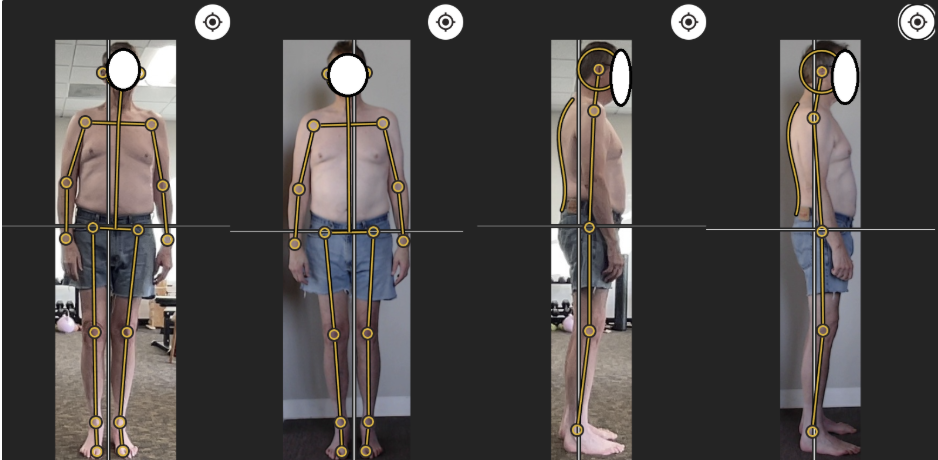
Mike’s progress didn’t come from doing the same exercises forever—it came from following a dynamic, progressive plan that met his body exactly where it was each week.. As his posture improved and his body responded to his initial routine, his exercise menu was gradually adjusted to keep pace with his progress. New exercises were introduced, while others were modified or replaced to continue guiding his body toward better balance and alignment.
Over the course of several months, this steady progression allowed Mike to move past pain relief and build a foundation that didn’t just stop the ache, but allowed him to thrive in the activities he loves. Today, Mike’s routine isn’t just about keeping his knee pain from coming back. It’s a long term strategy to maintain his body’s balance and stay active for the years ahead.
Moving Forward
If you’re reading this article and knee pain has been holding you back, there is reason for hope.
With a personalized plan and a commitment to restoring balance in your body, many people find themselves returning to activities they once thought were lost.
Your body was designed for movement—for walking, running, exploring, and living fully.
Sometimes, it just needs a little help finding its way back to balance.
